
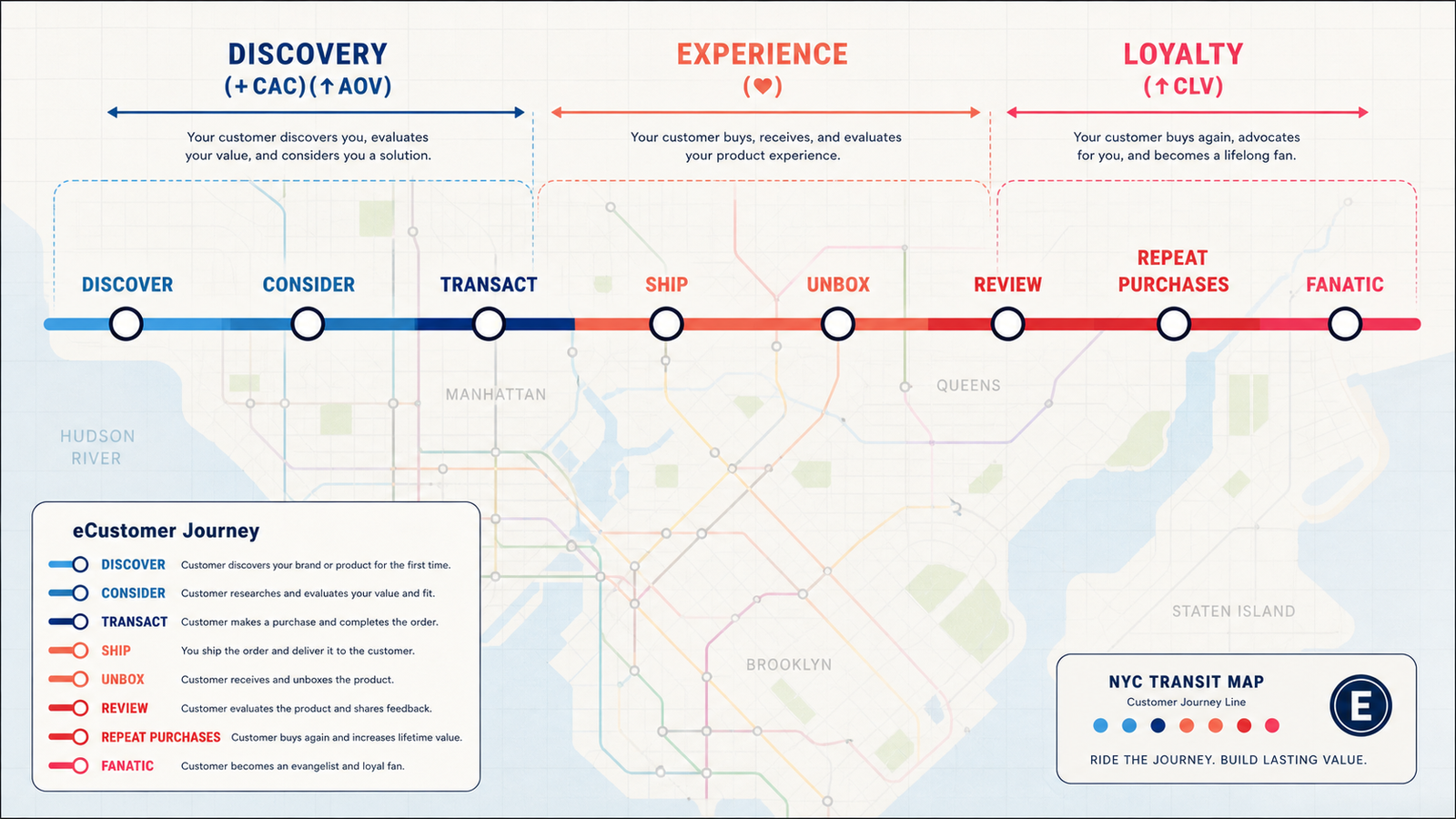
30-Second Executive Summary
A customer referral program gives satisfied customers an easy way to introduce your brand to a friend. A first-order benefit can encourage the friend to try your product, while a reward toward another order gives the existing customer a reason to return.
Start with an experience customers feel confident recommending. Then track whether referrals lead to new buyers, repeat purchases, and profit after rewards and other costs.
NPS tells you how willing customers say they are to recommend you. Referral purchases show whether those invitations lead to orders.
Earn the Recommendation Before Offering a Reward
When customers recommend your brand, they put their own judgment behind it.
The experience needs to support that confidence. Your product should meet expectations, delivery should match your promise, and getting help should be straightforward.
Part 1 explored how thoughtful follow-up encourages another purchase. Part 2 introduced the Gaps Model to help identify where the experience falls short. A referral program builds on that work by giving customers a way to share a product they enjoy.
Give Both Customers a Reason to Buy
Imagine your Shopify brand sells coffee.
A customer shares an invitation that gives a friend a first-order benefit. After the friend makes a qualifying purchase, the customer receives credit toward their next order.
The friend has a reason to try your coffee. Your customer has a reason to return.
Explain what each person receives, what qualifies for a reward, when it becomes available, and how to redeem it. Choose benefits your margins can support.
Use NPS to Understand Willingness to Recommend
Net Promoter Score, or NPS, asks how likely customers are to recommend your business on a scale from zero to ten.
The score is the percentage of promoters, who answer 9–10, minus the percentage of detractors, who answer 0–6. Customers answering 7–8 are classed as passives. [1]
Ask why they chose their score. Their answers can reveal what they value and what needs attention.
Keep referral rewards separate from survey feedback. A reward should follow the referral conditions you have explained, rather than depend on a positive NPS response.
Willingness to recommend and completed referrals answer different questions. Track them separately.
Measure What Happens After the Referral
A referred customer’s first purchase begins a new relationship. Your product and follow-up still need to earn their next order.
Track three things:
- Check whether invitations bring new buyers. Measure qualifying purchases through your referral program, rather than counting shares alone.
- Follow both customers’ next purchases. Does the referring customer use their reward? Does their friend return after the first order?
- Account for the costs. Include product costs, rewards, discounts, fulfilment, and program costs when assessing the purchases.
Repeat purchases can increase customer lifetime value. Referrals introduce new customers whose value develops over time.
Keep the referring customer’s purchases separate from the friend’s purchases. Record reward costs consistently so the same value is not counted twice.
Build Relationships That Continue Beyond the Reward
Start with one clear referral offer and an easy way to share it. Review whether it brings in buyers and encourages further purchases at a cost your business can support.
The reward creates a reason to act. The experience gives both customers a reason to keep choosing your brand.
References
- Bain & Company. “Measuring Your Net Promoter Score.” Accessed November 2, 2026. https://www.netpromotersystem.com/about/measuring-your-net-promoter-score/.